In this guide
A downloaded solicitation is a snapshot. It may be followed by questions, addenda, recommendations and later contract records. For Phoenix employees outside procurement, the practical skill is to recognize those document stages without behaving as though reading them grants purchasing authority. The live solicitation and its named procurement contact remain the controlling route for a specific opportunity.
Find the current public record
Phoenix's procurement FAQ describes OpenGov as supporting solicitations, addenda, vendor questions, proposals, evaluations and award recommendations. It also identifies the move to that system for new solicitations beginning in April 2025. Use the official City route to locate the relevant record instead of assuming an old bookmark represents the current process.
A useful reading note begins with the solicitation identifier, title, status and checked date. Do not call it a contract merely because it describes a service in detail. A solicitation asks for responses; later records establish other stages. Keep those labels in the language you use with coworkers.
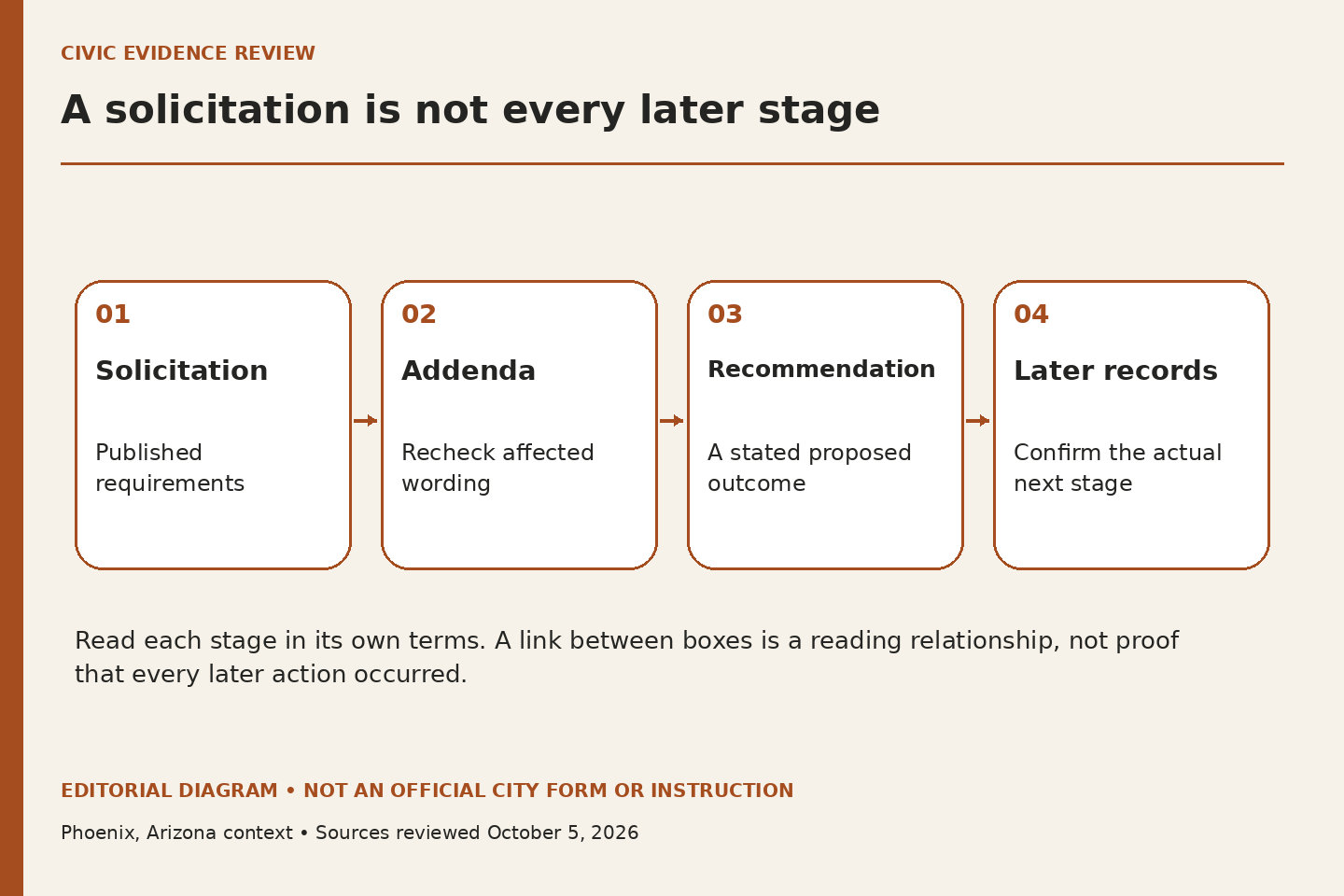
Treat an addendum as a reason to reread
If the public record contains an addendum, inspect what it changes and which earlier sections it affects. A deadline, requirement or answer may be modified without the original PDF filename changing. A saved local copy should not silently become the source of truth for a later discussion.
Use an invented example of a grounds-maintenance solicitation whose question period changes. The correct reading task is to identify the current published instruction and its effective context. It is not to calculate a new deadline from memory or tell a potential vendor that an old date probably still applies.
Separate recommendation from completed action
An award recommendation is a stage, not a universal synonym for an executed agreement or a notice to start work. A reader needs the later applicable records before making those claims. The distinction matters for workforce planning: staff should not promise that a contractor is ready merely because a recommendation has appeared.
When a colleague asks whether a service will begin, identify which evidence is present and what remains to be confirmed. That might include contract status, approved scheduling or an authorized project update. Do not use this article as a substitute for procurement instructions or communication restrictions in a live solicitation.
Make a version trail people can follow
Record the public documents in order, with their stated dates and relationships. Mark replaced information so an old attachment is not forwarded as current. A short note explaining why a version matters is more useful than a folder full of nearly identical filenames.
For specific vendor questions, follow the live record's contact and communication rules. This publication does not accept bids, recommend vendors, interpret contract terms or authorize an employee to commit the City. It helps a reader stop at the right evidentiary boundary.
Sources and limits
Official public sources checked October 5, 2026. Examples and exercises are original editorial illustrations, not City records or instructions.
- New Procurement Portal FAQs
Published OpenGov procurement scope and migration context. Follow the live solicitation for deadlines and contact rules.